Mindful Tech Boost: AI Micro-Habits for Emotional Balance
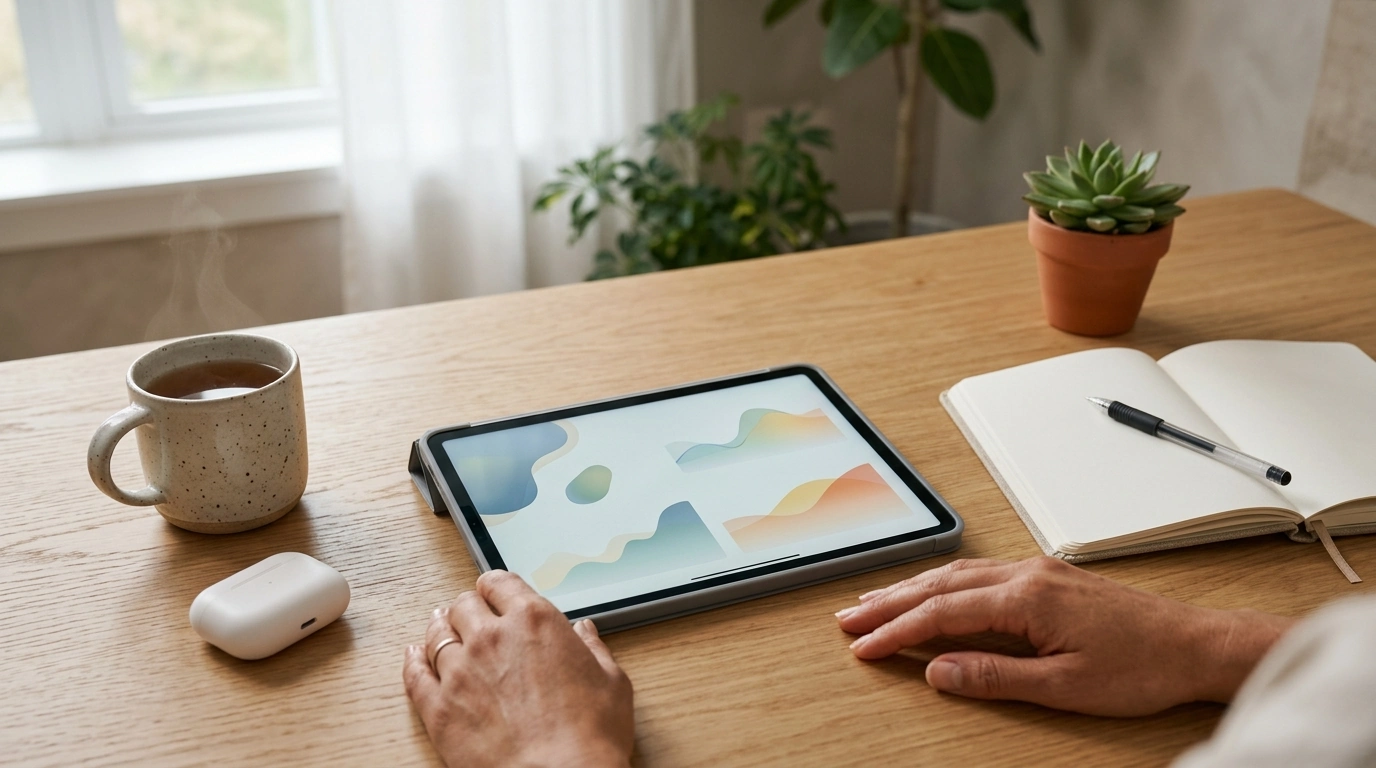
Mindful Tech Boost: A Digital Guide to Emotional Balance, Self-Awareness, and AI-Supported Habits
Mindful Tech Boost is a digital guide designed to help build emotional balance and self-awareness using practical exercises plus AI-assisted tracking. It focuses on small, repeatable routines for noticing patterns, regulating stress, and turning insights into healthier daily habits—without adding more overwhelm. If your days tend to blur together in reactive scrolling, sleep drift, or “why am I so tense?” moments, a lightweight system can make it easier to pause, notice, and choose what helps next.
What emotional balance and self-awareness look like day to day
Emotional balance isn’t about staying calm all the time. It’s noticing feelings early, responding with intention, and recovering faster after stress. Self-awareness is the skill of recognizing triggers, needs, and thinking patterns without harsh self-judgment—so you can work with what’s happening instead of fighting it.
Common signs it’s time for a reset include reactive scrolling, irritability, brain fog, inconsistent routines, and sleep shifting later and later. A realistic goal is fewer “auto-pilot” moments and more informed choices—especially during busy or emotional days.
For an evidence-based perspective on stress and the body’s response, the American Psychological Association outlines how stress can affect physical systems and daily functioning: https://www.apa.org/topics/stress/body.
How AI can support mental wellness tracking (without replacing real care)
AI can be helpful as a reflection and organization tool, especially when you’re tired, overwhelmed, or stuck in repetitive thoughts. Used with boundaries, it can reduce friction rather than create more work.
- Pattern-finding: Summarize mood notes and highlight recurring themes—stressors, times of day, social factors, or habits linked to better recovery.
- Reflection prompts: Generate gentle questions to explore emotions and values when words are hard to find.
- Habit scaffolding: Turn goals into tiny steps, reminders, and checklists tailored to real constraints (time, energy, schedule).
- Language support: Rephrase harsh self-talk into more balanced, compassionate statements you can actually use.
- Boundaries: AI can assist reflection and organization, but it does not diagnose, treat, or provide emergency support.
If you’re looking for reputable mental health education and self-care basics, the National Institute of Mental Health has a helpful overview here: https://www.nimh.nih.gov/health/topics/caring-for-your-mental-health.
What’s inside Mindful Tech Boost
The Mindful Tech Boost digital guide is built for consistency over intensity—so you can practice in minutes, not hours.
- A guided framework for combining mindfulness practices with tech tools in a low-friction way.
- A simple tracking system for moods, triggers, sleep, focus, and recovery habits.
- AI-assisted templates for check-ins, weekly reviews, and habit experiments that can evolve with your schedule.
- Practical emotional regulation exercises like pause-and-name, body scan snapshots, and “next right step” planning.
- Designed for real life: short routines that still work on messy days.
For anyone who uses audio to create a calmer bubble during work blocks or commutes, TWS Wireless Gaming Earbuds can pair well with mindful listening, breath pacing, or a quick “reset track” while you do your midday check-in.
A 7-day starter routine (micro-habits that compound)
The goal of a starter routine is momentum. You’re not proving discipline—you’re collecting data about what helps.
- Day 1: Set a baseline—one sentence on how the day feels + one need (rest, connection, clarity, movement).
- Day 2: Track a trigger—note what happened, what was felt, and what helped (even a little).
- Day 3: Build a 2-minute reset—breathing + posture + one small action (water, stretch, step outside).
- Day 4: Create a “friction reducer”—remove one obstacle (notifications, cluttered home screen, late caffeine).
- Day 5: Strengthen recovery—schedule one recovery block (10–20 minutes) and protect it.
- Day 6: Review patterns—ask AI to summarize themes from your notes and propose 2 experiments.
- Day 7: Choose a weekly anchor—pick one habit to keep and one to pause.
Weekly check-in snapshot
| Moment | What to note (10–30 seconds) | AI-supported prompt (optional) |
|---|---|---|
| Morning | Mood (1–10) + body cue (tight jaw, heavy chest, calm) | “What would make today 5% easier?” |
| Midday | Stress level + main trigger | “What’s the smallest reset that fits the next 2 minutes?” |
| Evening | Win of the day + what drained energy | “Summarize my day in 3 themes and 1 gentle takeaway.” |
Quick daily plan (with an HTML table you can copy into notes)
Use this as a “minimum viable” routine on busy days. The win is showing up briefly and consistently, then letting weekly summaries do the heavy lifting.
| Time | Action | Purpose |
|---|---|---|
| 60 seconds (AM) | Rate mood + name one priority | Build awareness before the day speeds up |
| 2 minutes (midday) | Reset: breathe, relax shoulders, drink water | Interrupt stress momentum |
| 3 minutes (PM) | One-line reflection + plan one helpful step for tomorrow | Close the loop and reduce rumination |
Privacy and safety basics for AI-assisted journaling
For broad, trustworthy information on mental health and wellbeing, the World Health Organization provides a helpful overview: https://www.who.int/health-topics/mental-health.
Who this guide fits best
Getting started in under 15 minutes
FAQ
Is Mindful Tech Boost a therapy replacement?
No. It’s a self-guided digital resource for reflection, habit-building, and AI-supported tracking; it’s not a substitute for diagnosis, treatment, or crisis care from a qualified professional.
What do you need to use the guide?
You only need a phone or computer and a simple place to track (notes app or journal). Optional AI tool access can help with summaries and prompts, and most routines take just a few minutes a day.
How can AI help without making tracking feel obsessive?
Keep check-ins short, focus on patterns instead of perfection, and rely on weekly summaries rather than constant logging. Use AI primarily for gentle prompts and synthesis, not for minute-by-minute monitoring.










Leave a comment